
Bowel Function After Spinal Cord Injury

Click the triangle below to listen to the podcast brief and access the transcript by clicking here.
What You Need to Know
A spinal cord injury can lead to bowel problems:
- You may have problems moving waste through your colon (large intestine).
- You may pass a stool when you don’t want to (bowel accidents) or a stool may be hard to pass (constipation).
- These problems can cause bloating, discomfort, or pain in your abdomen.
- Eating may be affected—you may feel full with only a few bites of food, or you may eat less than you usually do (which can lead to poor nutrition).
- Bowel problems can contribute to depression or anxiety. You may feel overly concerned about having bowel accidents or not being able to control stool passage in public. You may not want to do things outside of your home.
A bowel program can help you have regular, planned bowel movements. Following a bowel program can help you to avoid other problems (nerve pain, spasticity, autonomic dysreflexia) and perhaps bowel surgery.
Understanding Your Body
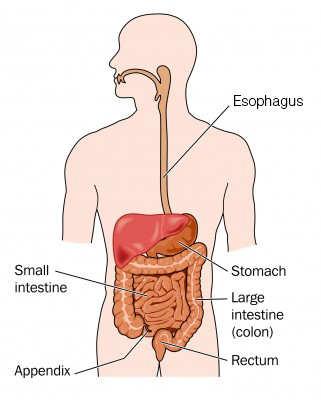
Your stomach and small intestine pull nutrients from the food you eat. Nutrients keep you strong and give you energy. The rest of the food your body doesn’t need becomes waste. Waste forms into a stool in your colon and rectum and is emptied from your body through the anus. The process of passing a stool through and out of your body is known as a “bowel movement.” If you have a spinal cord injury (SCI), this process may be tough for you. For example, you may have a difficult time passing stools. This is called “constipation.” Or you may not be able to control when you pass a stool and you may have a bowel accident. This is called “stool incontinence.”
An SCI may cause tightness (spasticity) or looseness (flaccidity) in the muscles of the rectum, sphincters, and pelvic floor. The degree of tightness or looseness may be related to the severity or completeness and level of your injury. If your injury is above level T11/T12, then the muscles of your sphincters and pelvic floor may be tight, which leads to constipation. If your injury is at level T11/T12 or lower, then these muscles may be loose, which leads to stool incontinence. People with more incomplete SCIs tend to have more muscle strength and sensation and therefore have fewer bowel problems than people with complete injuries.
What Is a Bowel Program?
A bowel program is a customized plan to help your body to have regular, timed bowel movements. A doctor or nurse designs a bowel program specifically for you and with you. your health, bowel and personal history, and physical examination are taken into consideration and include the following factors:
- The level and completeness of your spinal cord injury
- Description and pattern of bowel problems
- Past and present medical problems
- Intake of food and drink
- Physical activities
- Assistance needed for stool emptying and cleanup
- Home environment
- Lifestyle
- Preferences for timing and frequency of bowel movements
- Gastrointestinal tests
The goals of a bowel program are:
- Passing a stool every day or every other day
- Preventing unplanned bowel movements
- Emptying your bowel around the same time of day (e.g., morning, afternoon, or evening)
- Passing medium or large stool (about 2–3 cups) with each bowel movement
- Emptying all or most of your rectum on each day of your bowel program
- Having stools that are soft, formed, and bulky
- Emptying your bowel completely within 30 minutes (or 60 minutes, at most) of starting your bowel program
What Is Involved in a Bowel Program?
A bowel program includes four parts: timing, diet (including food and fluids), medicines, and techniques to help with bowel movements. The program isn’t the same for everybody because each person has different needs and responds differently to each part of the program.
Timing
A bowel program is best when done every day or every other day and at a consistent time of day. A program involves:
- Eating a good diet and drinking plenty of fluids
- Using bowel medicines (oral and/or rectal) at specific times of day, as recommended by your doctor
- Using techniques that activate the reflex to empty your rectum (digital rectal stimulation)
- Using strategies to clean out stools (digital evacuation, enemas, transanal irrigation)
Diet and fluids
Eating a good diet and drinking plenty of fluids are important to bowel health.
- Natural fiber from fruits and vegetables increases the bulk of stool, making it easier to move through the colon. Doctors recommend 38 grams of fiber per day for men and 25 grams per day for women.
- When eating a diet high in fiber, you should drink plenty of fluids. Water is best. You may get constipated if you don’t drink enough fluids. You should drink at least 2 or 3 quarts of fluids every day, unless told otherwise by your doctor.
- You should limit your intake of liquids with caffeine (e.g., coffee, tea, or energy drinks). These drinks actually remove fluids from your body.
Medicines (for Stool Movement Through the Colon)
Your doctor may have you take one or more medicines, either orally or rectally:
- Stool softeners make stools soft and easy to move.
- Stimulant laxatives (senna, bisacodyl) stimulate the colon to move stools.
- Bulking laxatives (psyllium, wheat dextrin, methylcellulose) add shape and form to stools and prevent diarrhea (watery stools).
- Rectal laxatives (bisacodyl, docusate [enemeez] suppositories) help with rectal movement and emptying.
The following medications can contribute to constipation and can be minimized with the supervision of your physician:
- Medicines to reduce pain (hydrocodone, oxycodone, morphine, fentanyl, gabapentin, pregabalin, or carbamazepine)
- Medicines to treat bladder spasms but slow down intestinal motility (oxybutynin or tolterodine)
- Medicines to control muscle spasms all over the body (lioresal, tizanidine, or diazepam)
- Medicines to treat depression (duloxetine, sertraline, citalopram, amitriptyline, or nortriptyline)
Techniques/Strategies (for Stool Emptying)
You can do one or more techniques to help you have a bowel movement and empty your rectum. You can do these at home or with help from a caregiver or nursing aid.
- Digital rectal stimulation: Move your fingertip in a small, gentle, circular motion around the rectum/anus. This motion stimulates the reflex of the rectum/anus. Be sure to cut your fingernails short to avoid trauma. Perform this technique for 20 seconds and repeat it every 5–10 minutes until the bowel program is completed and the rectum is empty.
- Digital removal of stool: Use your finger to remove stool from the rectum. This aids with more complete evacuation of stool from your rectum.
- Enema: Use a device to flush warm water into your rectum, which will help to empty it of stool. Examples of devices include the catheter enema or cone enema.
- Transanal irrigation device: This home stool evacuation device (such as Peristeen or Navina) assists with more complete emptying of the rectum and the colon. The device uses a rectal catheter with a balloon, which creates a seal that allows for the installation of water with a pressurized system.
- PIE (pulsed irrigation evacuation): This system uses a rectal catheter that cycles small amounts of warm water that are pulsed into the colon to flush stool out. The cycle is repeated until the fluid that comes from the rectum is clear.
What If I Can’t Do a Bowel Program or It Doesn’t Work?
Various situations or medical problems may keep some people from carrying out a bowel program. For others, the program just may not work. Every person is different. Surgery may be a good option in a few cases. For example:
- If you can’t achieve regular, complete bowel movements, which can lead to recurrent severe constipation (associated with frequent hospital admissions for stool loading and obstruction; chronic abdominal pain; prolonged [greater than one hour hour], difficult bowel programs; or severe autonomic dysreflexia1)
- If you have frequent stool incontinence or lack caregiver support, both of which may contribute to a poor quality of life and confinement in the home
- If you have pressure sores in your buttocks or pelvic areas that can be contaminated with stools
Surgical options are discussed in the section that follows.
Colostomy
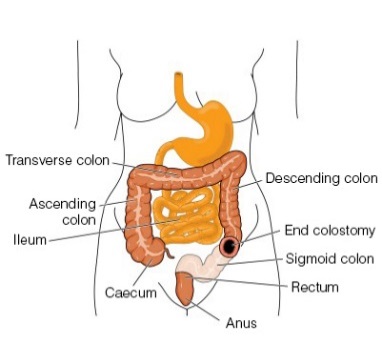
Surgeons attach the colon to the abdominal wall through a hole called a “stoma” (or opening). A bag is attached to the stoma. Stools pass into the bag instead of through the rectum. You or a caregiver empty and change the bag easily and regularly.
Most people who have a colostomy choose to have it permanently. The colostomy promotes good bowel movements and is easy to manage by yourself or by a caregiver. The procedure prevents stool incontinence and unplanned bowel movements. It also decreases mental stress so you can do more activities outside the home with family and friends.
Antegrade Continence Enema
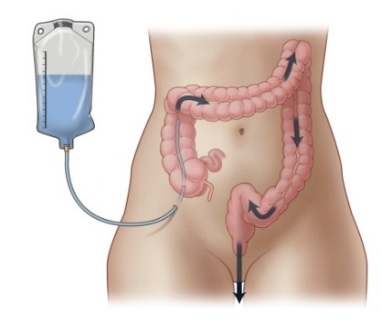
Surgeons open the abdominal wall to create a tract to either the first part of the colon (ascending colon) or the last part of the colon (descending colon/sigmoid) (see figure). You or a caregiver place an enema catheter through the stoma daily to flush the stool out of the colon with 500– 1,000 milliliters of tap water. This process usually lasts from 30 to 60 minutes. Cleansing the colon daily and regularly prevents unplanned bowel movements and stool incontinence.
Why Is Maintaining Bowel Function So Important?
Worsening and untreated bowel function can lead to other health problems, such as:
- Partial paralysis of the stomach.
- Chronic heartburn.
- Gas pain.
- Stomach or intestinal ulcers.
- Hemorrhoids.
- Abdominal discomfort, pain, or distension.
- Nausea.
- Bloating or fullness.
- Change in weight (related to a poor diet or a decrease in appetite).
- Autonomic dysreflexia—This is a serious condition where a dangerous elevation in blood pressure is associated with a drop in heart rate in people with SCI at levels T6 and above. It may cause heavy sweating, flushing, headaches, and blurry vision. If left untreated, it may lead to stroke, bleeding in the eyes, swelling of the heart or lungs, and other severe health problems.
- Worsening pain and/or spasticity.
- Depression and anxiety.
- Decreased sense of well-being.
These health problems can reduce your quality of life. But you may be able to avoid these problems by following a bowel program every day or every other day. Your doctor or nurse can help you and will check with you to see how you’re doing. Ask questions, and let your health care professional know about any problems you’re having.
Authorship
Bowel Function After Spinal Cord Injury was developed in 2015 and updated in 2025 by Gianna M. Rodriguez, MD, in collaboration with the Model Systems Knowledge Translation Center (MSKTC).
Source: The content in this factsheet is based on research and/or professional consensus. This content has been reviewed and approved by experts from the Spinal Cord Injury Model Systems (SCIMS) centers, funded by the National Institute on Disability, Independent Living, and Rehabilitation Research (NIDILRR). The content of the factsheet has also been reviewed by individuals with SCI and/or their family members.
Disclaimer: This information is not meant to replace the advice of a medical professional. You should consult your health care provider regarding specific medical concerns or treatment. The contents of this factsheet were developed under a grant from the National Institute on Disability, Independent Living, and Rehabilitation Research (NIDILRR grant number 90DP0082) and were updated under an NIDILRR grant (90DPKT0009). NIDILRR is a Center within the Administration for Community Living (ACL), Department of Health and Human Services (HHS). The contents of this factsheet do not necessarily represent the policy of NIDILRR, ACL, or HHS, and you should not assume endorsement by the federal government.
Neither SCI Model Systems, MSKTC, nor NIDILRR has examined, reviewed, or tested any product or device cited in the factsheet. None of the parties involved make endorsement, representation, or warranty as to any product or device contained in this factsheet.
Recommended citation: Rodriguez, G. M. (2025). Bowel function after spinal cord injury. Model Systems Knowledge Translation Center (MSKTC). https://msktc.org/sci/factsheets/bowel-function-after-spinal-cord-injury.
Copyright © 2025 Model Systems Knowledge Translation Center (MSKTC). May be reproduced and distributed freely with appropriate attribution. Prior permission must be obtained for inclusion in fee-based materials.